
Pixellab is an extremely versatile graphic design app that lets us create anything from fancy text designs to photo edits. No matter if we ‘re a complete novice or an experienced graphic designer, learning Pixellab can help you turn your creative ideas into reality. In this step-by-step guide, learn the ins and outs of the app, starting with the basics including setting up our canvas and adding text and graphics.
If you’d like to explore more options, you can download the Pixellab Mod APK for an upgraded experience. In case you like to work with older versions, then we can try out the older Pixellab versions. Additionally, if we want to work on a larger screen, we can use Pixellab on your PC for a more efficient design process. Let’s get into the world of Pixellab and start creating!Pixellab Essentials: Learn the Basics and Advanced Features
Pixellab is a great photo editing and text design app. It’s really easy to use it if we are making awesome text effects, designing posters or editing images.
1. Installation and Setup:
Downloading the App:
- Android users can download Pixellab app from the app store or trusted third party websites like ours. As far as iOS is concerned it’s not available, but you can use other alternatives such as Canva and Phonto.
- Install the Application from the link given below:
Installing the App:
- Follow all of the on-screen instructions during the installation process. Make sure we grant it all of the permissions it needs to function properly (e. g. access to storage).
First-Time Setup:
- Open the app, read the terms of service and do whatever configuration we need (like we want to set the language we want).
2. Interface Overview:
Pixellab’s interface is intuitive and organized. Here’s a simpler version:
- Toolbar: At the top of your project we’ll find options to create new projects, open another one, share or save your project.
- Editing Tools Panel: This section, at the bottom, provides a panel to access editing tools like text, shapes, stickers, images, editing tools and effects.
- Workspace: The central area in which we create our designs and edit them.
- Layers Panel: On the upper right side of our application is a panel for easily manipulating different graphic components.
3. Basic Features:
Adding Text:
- Click the “Text” tool and create a new text box using it. Edit text box’s font, colors, alignment and size in the text editor.
- Add effects such as shadows, reflections and emboss for a professional look.
Using Shapes and Stickers:
- Place the basic shapes via the “Shapes” option in the middle area of the bottom toolbar: rectangle, triangle, heart, star, circle, polygon and etc. Adjust their size, color, radius and opacity.
- Add stickers from the built-in library to enhance your design.
Editing Backgrounds:
- Change the background color, or add an image to use as background on your design.
- Use gradient or pattern options for more creative effects.
4. Advanced Tools:
Layer Management:
- We can use the layers panel to organize and control elements in your project. Drag and drop the layers to up or down.
Blending Modes:
- Blending modes are very helpful when trying to produce something unique out of combining layers.
3D Text and Transformations:
- 3D Text generated with the “3D Text” tool. Soften depth, angle and lighting for realistic textures.
- Use perspective and skew tools to transform elements as needed.
Drawing and Masking Tools:
- Draw custom shapes or lines with the “Draw” tool.
- Masks; To hide / reveal portions of an element or image.
5. Practical Tutorials:
Creating Text-Based Designs:
- Add a catchy phrase make the font customized and use shadows and gradients for a good logo.
Editing Photos:
- We import a photo and apply some filters to it, add text/stickers to it.
Designing Social Media Posts:
- Layout a canvas of the specified dimensions (for platforms like Instagram/ Facebook). Share graphics and text if it has interesting content.
6. Saving and Exporting Projects:
Saving Your Work
- Tap the save icon to save your project in the app.
Exporting Files:
- Select the export option to save your design in an image file (for example PNG, JPEG) with different resolution options.
- Share directly to social media, or other apps from within Pixellab.
7. Few Tips and Tricks:
- Use the grid and snap options to align elements perfectly.
- Explore font packs and additional resources online for more customization.
- Utilize shortcuts like double-tapping on elements to edit them quickly.
8. Troubleshooting Common Issues:
App Crashes or Slow Performance:
- Make sure the app is updated to the latest version. Clear cache/reinstall if needed.
Saving Errors:
- Check storage permissions and available space on your device.
- Rather than read long guides you can watch this short video tutorial to learn step by step how to unlock all the goodies available in Pixellab
How to make A4 size paper in pixellab?
To create an A4-size paper in Pixellab APK, follow these steps:
- Press the three dots in the top right corner of the application ‘s interface.
- A dropdown menu will appear; select the “Image Size” option.
- With the aspect ratio 5: 7 set you can also lock in the custom size of the image to a width of 210 and a height of 297.
What is the size of a4 paper in pixellab?
The dimensions of A4 paper in Pixellab at 300 pixels per inch (ppi) = 2480 x 3508 pixels.
Here ‘s A4 paper ‘s dimensions in pixels at different resolutions
- 300 DPI (print resolution): 2480 x 3508 pixels
- 72 DPI (screen resolution): 595 x 842 pixels
A4 paper is 210 x 297 millimeters / 8. 3 x 11. 7 inches.
How to redo in pixellab?
Pixellab offers handy keyboard shortcuts for designers:
- Ctrl + Z: Undo your last action.
- Ctrl + Y: Redo an undone action.
- Ctrl + C and Ctrl + V: Copy and paste elements within your design.
On Android devices you can use the Undo and Redo buttons present on the top bar of the app. Simply tap the Undo button to undo an action or the Redo button to undo a mistake.
How to remove background in pixellab?.
To remove the background of a picture in Pixellab, please do the following:
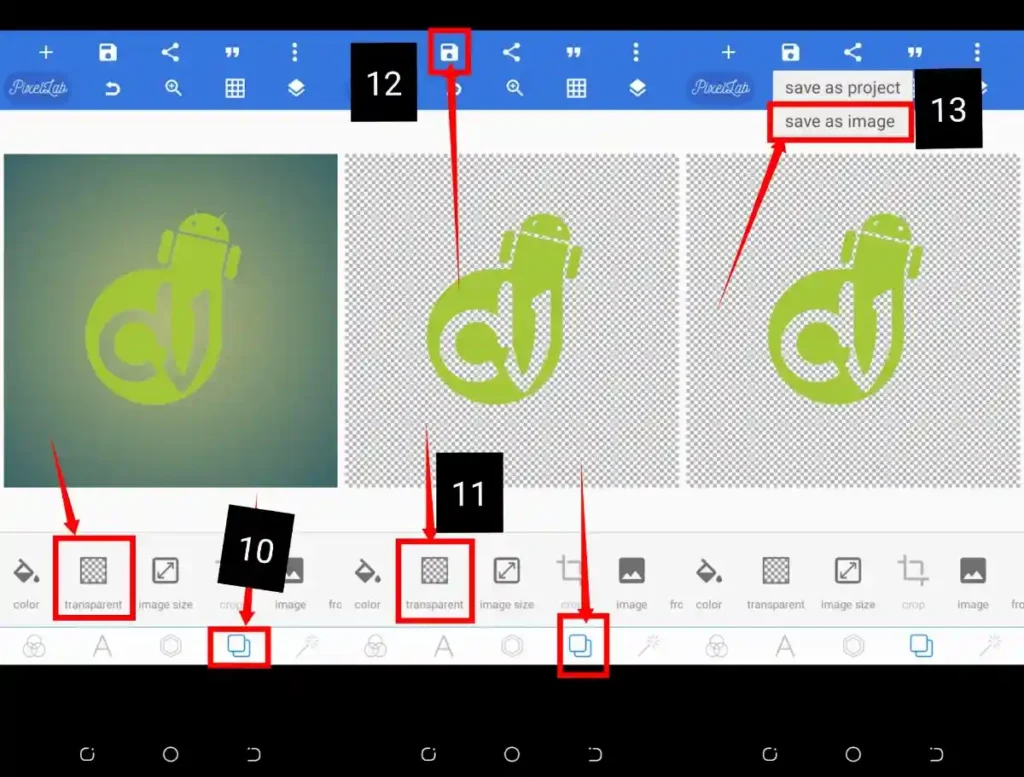
- First, import the image to the pixellab.
- Then select the image and search for the “eraser tool”.
- Enable the eraser tool and select the “color picker”.
- Now using this tool you will select the colour of background of the image and then erase it.
- After that, set the tolerance according to your requirements.
- You can also smooth out the edges using the “smooth edges” tool.
How to make PNG in pixellab?
To make a PNG in Pixellab:
- Open the Pixellab app.
- Create or edit your design.
- Once done, tap the “Save” icon (top right).
- Choose “Save as Image”.
- Select “PNG” as the file format.
- Save the file to your device.
How to open psd file in pixellab?
Pixellab does not support PSD (Photoshop Document) files (yet), but you can work around that restriction by extracting the content from the PSD. Here’s how:
How to Open a PSD File in Pixellab:
1. Extract Layers from the PSD File:
- Install Photoshop and open the PSD file with either Photopea (free online editor) or Adobe Photoshop.
- Export the layers or the whole design as PNG or JPG. I suggest exporting as PNG if you need a transparent background.
2. Transfer the Images to Pixellab:
- Save the exported images to your device.
- Import them to Pixellab by tapping on the + icon (from Gallery) and choosing “Insert”.
3. Adjust and Customize:
- Once your images are stored in Pixellab you can resize, position and edit them as you see fit.
- Use Pixellab’s editing tools to add text, effects or other design edits to your project.
By converting PSD layers into image formats that Pixellab supports you have the ability to insert them into your designs very easily.
How to use pixellab pdf?
Pixellab doesn’t natively support PDFs, but you can use PDFs in your projects by converting them to another format Pixellab supports. Here’s how.
How to use pixellab pdf?
Convert PDF to an Image:
- You can convert your PDF to an image format ( like PNG / JPG ) with an app like Adobe Acrobat, a free online PDF to image converter or any other PDF to image converter app.
- You can also choose to convert all the pages ( if your PDF has multiple pages ) or just the ones you want.
Import the image in Pixellab:
- Once a PDF is converted to an image, save that to your device.
- Click Pixellab and then click + icon to select “From Gallery ” and choose the image(s) you want to upload.
Edit and Customize:
- You can modify the position, size, and orientation of the image after its import.
- Text, graphics, effects or other design formats you want to place in your project with Pixellab.
With converting PDF pages to an image file it’s easier to edit and customize them further in Pixellab.
How to add font on pixellab?
In these steps you can directly download and import your custom fonts into Pixellab app.
Download the Font:
- Choose a font. For example, from sites like Dafont you ‘ll find a lot of beautiful fonts for free.
Extract and Save the Font:
- Use the Zarchiver app to extract the downloaded font.
- Copy and paste the. otf or. ttf file into the Pixellab Fonts folder.
Open Pixellab:
- Open the app, select ” Text “ and type in what you want.
Add the Font:
- In the menu bar go to the “Font” section and then “My Fonts”.
- Click on the Add Font icon, go to the folder where you saved the font and choose it.
Use the Font:
- Once imported the font is ready to use in your text designs.
And that’s it. You can now easily use custom fonts or Marathi fonts, Urdu fonts and Hindi fonts in your Pixellab projects.
What is the size of business card in pixellab?
In Pixellab, a business card originally designed by our team should be 1050 x 600 pixels at 300 PPI ( pixels per inch ) because that ‘s what makes it easy to fit it in the wallet or card holder.
Additional Dimensions:
- Full Bleed Size 1083 x 633 pixels (not including extra space for designs that go all the way to the edge of the card).
- Safe Printing Area 1008 x 558 pixels so that no vital information gets cut off.
For all these dimensions the aspect ratio is 7: 4 (the usual business card aspect ratio). Always print at 300 PPI or higher for professional and sharp print.
How to blur in pixellab?
Here’s how you can blur text in Pixellab:
- Put your text into Pixellab and adjust your dimensions & text size as needed.
- Set the opacity of the text to 0 (completely transparent).
- To get the blur effect you need to go into the Shadow settings and change the Blur Radius.
That’s it! Your text will now appear blurred.
How to use the Bezier tool in pixellab?
A Bezier Curve is a tool for creating smooth and adjustable curves. You can use handles to control the angle, height and shape of the curve. You can also rotate the handles to create more unique shapes ( like an ” S ” curve ).
Steps to Create a Bezier Curve:
- Open Pixellab and select the Bezier Curve tool.
- Curve Start: Click where you would like the curve to start.
- Adjust the first handle. Drag the handle in the direction and length of the curve.
- End the curve: Click the point where you want the curve to end.
- Adjust the second handle: Drag this handle to refine the curve ‘s shape.
Tips for Better Control:
- You can slam the M key down while you ‘re dragging a handle, to work the curve out more accurately by moving the control arms.
- If you need to edit the curve later you can use the Edit tool to move the handles around and reshape the curve as needed.
This is the tool to make smooth lines / custom shapes in Pixellab!
How to use the Bezier tool in pixellab?
A Bezier Curve is used to create smooth and adjustable curves. Using handles you can manipulate the angle, height and shape of the curve, and by rotating the handles you can create other shapes like an ” S ” curve.
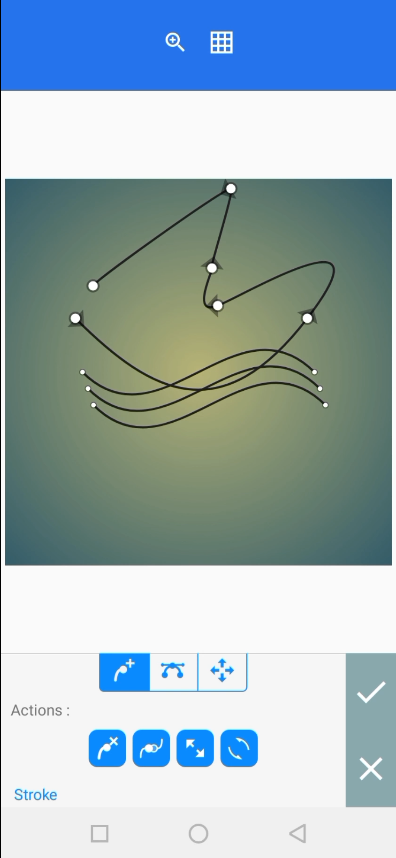
Steps to Create a Bezier Curve:
- Open Pixellab and select the Bezier Curve tool
- Curve Start: Click where you want the curve to start.
- Begin with the first handle: Drag the handle to change the direction and length of the curve.
- End the curve: Click where you ‘d like the curve to end.
- Adjust the second handle: Drag this handle to adjust the shape of the curve.
Tips for Better Control:
- You can slam the M key down while you ‘re dragging a handle, to work the curve out more accurately by moving the control arms.
- If you need to edit the curve later you can use the Edit tool to move the handles around and reshape the curve as needed.
This is the tool to make smooth lines / custom shapes in Pixellab!
How To Draw Circle In Pixellab ?
Pixellab, click on the circle in the shape’s tool and then add the value of “stroke width” to 60. This way you’ll get a clear border around the circle. At the end click on the “erase color” tool and enable it. And then add the value of tolerance to max. Then click on the transparent tool. That way you’ll get a clear circle with a transparent background. You can draw the size of the circle as you want and then save it with the “ultra” option.
Conclusion
Pixellab is an excellent app for both new users as well as professionals. With its varied functionalities and user-friendly interface you can turn those creative concepts into reality. Check out the possibilities available in this app and let your imagination run wild! For more inspiration and tutorials, check out more resources online!